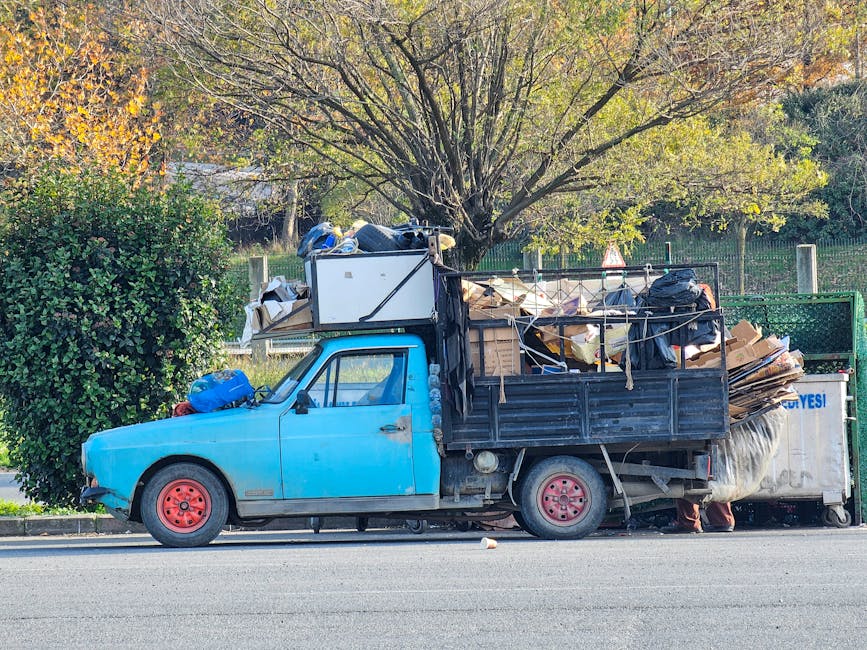
Top factors that shape your rubbish collection quote
If you have ever stood in a hallway, looked at a pile of unwanted stuff, and thought, "How much is this actually going to cost me?", you are not alone. The truth is that rubbish collection quotes are rarely random. They are shaped by a small set of practical factors: how much waste you have, what it is made of, how easy it is to remove, and what happens to it afterwards. Understanding the top factors that shape your rubbish collection quote helps you compare prices properly, avoid nasty surprises, and choose a service that suits the job rather than just the headline number.
In this guide, we break down exactly what affects pricing, how quotes are typically built, and how you can prepare your waste so the estimate is fair, transparent, and easier to understand. We will keep it plain-English, UK-focused, and useful whether you are clearing a single item or dealing with a full property tidy-up.
Table of Contents
- Why the quote structure matters
- How rubbish collection quotes are worked out
- Key benefits of understanding the pricing factors
- Who needs this and when it makes sense
- Step-by-step guidance for getting a better quote
- Expert tips for better results
- Common mistakes to avoid
- Tools, resources and recommendations
- Law, compliance, standards and best practice
- Options, methods and comparison table
- Case study or real-world example
- Practical checklist
- Conclusion
- Frequently asked questions
Why the quote structure matters
A rubbish collection quote is more than a price tag. It is a snapshot of the work involved, the vehicle needed, the time on site, and the disposal route for the waste. If you understand what sits behind the number, you can judge whether a quote is realistic or a bit too clever for its own good. And let's face it, a quote that looks cheap but adds extras later is not a bargain. It is just delayed frustration.
This matters because rubbish removal jobs can vary wildly. One customer may need a single sofa taken away from a ground-floor flat. Another may have a loft full of mixed household waste, broken furniture, and awkward access via a narrow stairwell. Those are not the same job, even if the "amount of rubbish" feels similar at first glance.
There is also a trust angle. A clear quote gives you confidence that the company has actually considered the job. That is especially reassuring if you are booking a larger clearance such as house clearance, office clearance, or builders waste clearance, where the difference between a rough estimate and a proper assessment can be significant.
Expert summary: The best rubbish collection quotes are usually built on three things: volume, handling difficulty, and disposal cost. If one of those is unclear, the quote often becomes less reliable.
How rubbish collection quotes are worked out
Most rubbish removal companies calculate a quote by combining several practical inputs rather than applying a single flat rate. In simple terms, they look at what needs removing, how much space it takes, how long it will take to load, and what the waste contains. Some jobs are straightforward. Others need a bit more judgement. A pile of clean cardboard on a driveway is not priced in the same way as mixed waste from a damp garage corner. That sounds obvious, but it is exactly where many misunderstandings begin.
Here are the main elements that usually feed into the quote:
- Volume: How much space the rubbish will take in the vehicle or container.
- Waste type: General household waste, bulky items, garden waste, builders rubble, furniture, or business waste.
- Weight: Heavier loads can cost more because disposal fees and handling demands are higher.
- Access: Stairs, narrow hallways, parking distance, and carrying time all matter.
- Labour: The number of people needed to safely lift and remove the items.
- Sorting needs: Some loads take longer if items must be separated for recycling or compliant disposal.
- Special handling: Certain materials, such as mattresses, fridges, or hazardous items, may involve extra treatment.
A company may gather this information through photos, a video call, a site visit, or a short checklist over the phone. For many jobs, a quick image is enough to build a pretty decent estimate. For awkward properties, a proper visit can save a lot of guesswork.
If you are comparing services, it helps to understand the wider pricing context too. The page on pricing and quotes is a useful place to see how a provider explains costs, while waste removal gives a broader view of the service category.
Volume is usually the starting point
Volume is often the first factor because it is the quickest way to estimate load size. If your waste fills a quarter of a van, that is a very different job from one that fills almost the whole thing. Even so, volume alone does not tell the full story. Light but bulky waste, like old cushions or broken wardrobes, may be easy to lift but awkward to stack. Dense material, like soil or rubble, can seem small and still weigh a lot. Not ideal for quote accuracy if you only go by eye.
Waste type changes disposal cost
Not all rubbish is treated equally once it leaves your property. Mixed household waste may need sorting. Garden waste can often be processed differently from furniture. Builders waste may include heavy or dirty material. Business waste can require added documentation or stricter handling. In practical terms, the more complex the waste stream, the more work is involved in disposal and recycling.
Access can quietly raise the price
This is one of the factors people forget until collection day. A front garden with parking nearby is one thing. A second-floor flat with no lift, a tight stairwell, and nowhere to stop the van? That is another story. Access affects time, fatigue, and safety. It also affects how many crew members are needed, which naturally affects the final quote.
Key benefits of understanding the pricing factors
When you know what shapes a rubbish collection quote, you can make better decisions from the start. You are less likely to overpay, less likely to get caught out by "extra" charges, and more likely to book the right type of service for the job. That alone saves stress. And time, which is often the bigger win.
- Better comparison: You can compare quotes on like-for-like terms instead of chasing the cheapest headline number.
- Fewer surprises: You know why a job costs more and where the money is going.
- Faster booking: Clear details mean fewer back-and-forth questions.
- More accurate scheduling: Crews can turn up with the right vehicle and enough time.
- Improved safety: Correct labour planning reduces rushed lifting and awkward handling.
- Smarter sorting: Separating reusable or recyclable items can sometimes make the job more efficient.
There is also a sustainability benefit. If a provider can identify recyclable materials early, they can often route waste more effectively. That may not always reduce the quote dramatically, but it can improve how the waste is handled. For readers who care about responsible disposal, the recycling and sustainability page is relevant to the bigger picture.
Who this is for and when it makes sense
This topic matters to almost anyone who needs rubbish removed, but a few groups benefit especially:
- Homeowners clearing out clutter before a move or renovation.
- Landlords dealing with leftover belongings after a tenancy.
- Tenants who want to avoid last-minute panic and missed deadlines.
- Builders and tradespeople needing quick removal of site waste.
- Business owners clearing offices, stockrooms, or storage spaces.
- People managing estates or inherited property where there may be a mix of furniture, personal items, and general waste.
It also makes sense if you are handling a specific clearance type. A garage clearance may seem simple until you discover half the contents are soaked, broken, or hard to move. A loft clearance can be deceptively expensive because of access. A garden clearance might involve green waste, old fencing, and a couple of heavy bags of soil. Different job, different quote.
Truth be told, the right quote often starts with the right mental model. If you think in terms of access, weight, and labour rather than just "a bit of rubbish," you will usually get a more realistic price from the start.
Step-by-step guidance for getting a better quote
If you want a fair rubbish collection quote, preparation makes a real difference. Here is a sensible way to approach it.
- Sort the waste into broad groups. Separate furniture, general waste, garden waste, and anything unusual. Even a rough split helps.
- Estimate the volume. Think in relation to bins, small van loads, half van loads, or full van loads. You do not need to be exact, just practical.
- Note anything heavy or awkward. Items like rubble, soil, white goods, wardrobes, or waterlogged materials can affect the price.
- Check access clearly. Mention stairs, parking restrictions, long carry distances, locked gates, or tight corridors.
- Take clear photos. Use wide shots and a couple of close-ups. If the pile is in a room, include the surrounding space too.
- Describe special items. Mattresses, sofas, appliances, paint tins, batteries, or mixed trade waste may need extra handling.
- Ask what is included. Confirm labour, loading, disposal, VAT if relevant, and whether the price can change on arrival.
- Compare quotes on the same basis. A low quote that excludes labour or access is not really the same offer.
A small but useful habit: send the same set of photos and notes to every provider. It keeps the comparison fair. Otherwise, one company quotes on a blurry picture and another prices from a detailed description, which is not much of a comparison at all.
A quick example of a better brief
Instead of saying, "I've got some rubbish at the back of the house," try: "I have around half a van of mixed household waste, two broken bookcases, and a small pile of garden cuttings. Access is via a side gate, and there are five steps down to the garden." That gives a provider something usable. Much better, honestly.
Expert tips for better results
Here are the little things that tend to improve quote quality and reduce friction on collection day.
- Be honest about the full load. If there is waste in the shed, loft, or under tarpaulin, say so. Hidden items often become hidden costs.
- Separate reusable furniture if possible. Clearer items are easier to assess and may be treated differently from mixed waste. Services such as furniture disposal and furniture clearance are often priced with item condition and volume in mind.
- Group similar materials together. It helps the crew load efficiently and can make the job feel much tidier.
- Flag access issues before booking. A short note about parking or stairs can prevent awkward surprises.
- Ask about recycling routes. If a provider sorts materials well, that can support a more responsible disposal process.
- Keep the area clear if you can. Moving cars or opening gates in advance can save time on the day.
One practical observation from real jobs: the tidiest-looking load is not always the easiest to quote. A neatly stacked pile in the driveway can be simple. A half-cleared room with items tucked behind furniture, under eaves, or in the loft is where complexity creeps in. Quietly, but it creeps.
And yes, a quick photo taken in daylight usually beats a dramatic evening shot where everything looks bigger and moodier than it is.
Common mistakes to avoid
Most quote problems come from missing details, not bad intentions. The good news is that they are easy to avoid once you know what to watch for.
- Only giving a rough guess of the volume. "Maybe a van load" is better than nothing, but it is still vague.
- Forgetting bulky hidden items. Mattresses behind doors and bags in cupboards can change the size of the job.
- Not mentioning access restrictions. Parking and carrying distance matter more than many people expect.
- Ignoring weight-heavy materials. Soil, rubble, tiles, and wet waste can alter disposal costs.
- Comparing quotes without checking what is included. Labour, loading, and disposal are not always bundled the same way.
- Leaving sorting until the crew arrives. That can slow the job down and affect the final price.
Another common one: assuming the cheapest quote is the best. Sometimes it is. Often it is not. A quote that looks low but is built on guesswork can end up being the most expensive by the time the dust settles. Bit annoying, that.
Tools, resources and recommendations
You do not need specialist software to estimate a rubbish collection quote sensibly. A phone camera, a tape measure, and a few minutes of honest checking are usually enough for most domestic jobs. For larger properties, a simple room-by-room list can also help.
Useful things to prepare before requesting a quote
- Photos of each waste pile from at least two angles
- A rough count of large items
- Notes on access, stairs, lifts, parking, and gate width
- A list of anything heavy, dirty, or potentially restricted
- Preferred collection dates and time windows
If you are dealing with a whole-property clearance, pages such as home clearance and flat clearance can help you understand how broader domestic clearances are approached. For workplaces, business waste removal and office clearance are useful references for the different needs of commercial spaces.
Small recommendation, based on common experience: create one simple note on your phone called "rubbish quote details." Keep your photos, access notes, and item list there. It sounds minor, but it saves a lot of repeated explaining when you speak to more than one provider.
Law, compliance, standards and best practice
Rubbish collection does not live in a vacuum. In the UK, waste has to be handled responsibly, and reputable providers will normally work in line with general waste duties, safe handling practices, and proper disposal expectations. You do not need to become a legal expert, but it is sensible to understand a few basics.
For example, waste carriers should be able to operate lawfully, and waste should be taken to appropriate facilities rather than dumped somewhere cheap and cheerful. If a quote seems unusually low, it is fair to ask how the waste will be handled and whether the provider follows sensible sorting and disposal practices. That is not being awkward. That is being careful.
Safety also matters on site. Heavy lifting, sharp objects, broken glass, damp materials, and awkward furniture all bring real risks. A good provider should think about load security, safe carrying routes, and whether extra people are needed. You can read more about general operational expectations on the health and safety policy and insurance and safety pages.
Best practice usually means:
- being clear about what is being removed
- keeping communication honest and specific
- sorting reusable or recyclable items where practical
- avoiding unsafe lifting or rushed collection methods
- using an estimate that reflects the real work involved
For customers, the big takeaway is simple: a clear quote is usually a sign of a more organised service. Not always, but usually.
Options, methods and comparison table
There are a few ways rubbish collection quotes are usually given, and each has its own strengths. The best one depends on the size and complexity of your job.
| Quote method | Best for | Pros | Limitations |
|---|---|---|---|
| Photo-based quote | Small to medium jobs | Fast, convenient, easy to share | Can miss access issues or hidden waste |
| Phone estimate | Simple one-off collections | Quick and straightforward | Depends heavily on how well the job is described |
| On-site visit | Large, mixed, or awkward clearances | Most accurate for complex jobs | Takes more time to arrange |
| Fixed item pricing | Single bulky items | Easy to understand | Less flexible if the load changes |
For instance, if you are just disposing of one sofa, a fixed-item estimate may work fine. If you have a whole loft to clear, an on-site visit or detailed photo assessment is usually more reliable. A single method is not automatically better. It depends on the job.
If you are deciding between a more general collection and a focused item service, the pages on furniture clearance and furniture disposal can help you think through the difference in approach.
Case study or real-world example
Imagine two fairly ordinary jobs.
Job A: A ground-floor flat with a single broken wardrobe, two bags of mixed household rubbish, and easy roadside access. The crew can park outside, walk a few metres, and finish the load quickly. The quote here is likely to be straightforward because the waste is easy to assess and easy to move.
Job B: A small terrace house with a loft full of old boxes, a mattress, a dismantled desk, and a few bags of odd bits. The access is through a narrow staircase, parking is down the road, and some items need carrying carefully around tight corners. Even if the pile looks similar in photos, the time and effort are very different. That changes the price.
The lesson is not that one customer "pays more for no reason." It is that the quote reflects the real work. That distinction matters. The cleaner and more accurate the brief, the more likely the estimate will feel fair on both sides.
We have seen this play out in garden jobs as well. A simple green-waste pile is often quick to quote. But once you add broken panels, damp timber, and soil bags, the job gets heavier, dirtier, and slower. Suddenly the quote shifts. Not because someone is being difficult, but because the disposal and labour picture has changed.
Practical checklist
Use this checklist before requesting your quote. It keeps things tidy and saves time later.
- Have I listed every item or waste pile?
- Have I mentioned anything heavy, wet, broken, or awkward?
- Have I checked whether access is easy or restricted?
- Have I included parking, stairs, lifts, or long carry distances?
- Have I taken clear, recent photos in good light?
- Have I said whether the waste is mixed or separated?
- Have I asked what the quote includes?
- Have I compared more than one estimate on the same basis?
- Have I confirmed the preferred collection date?
- Have I checked the provider's safety and disposal approach?
If you can tick most of those off, you are in a good position. The quote should be easier to trust, and the collection day should run more smoothly. Simple as that.
Conclusion
The top factors that shape your rubbish collection quote are usually the same ones every time: volume, weight, waste type, access, labour, and disposal complexity. Once you understand those pieces, the price starts to make sense. That does not mean every quote will be identical, but it does mean you can judge them more confidently and avoid paying for avoidable surprises.
To get the best result, be specific, send clear photos, mention access issues early, and compare quotes on the same terms. For larger domestic or business jobs, it also helps to understand the service type you need, whether that is a house clearance, garage clearance, or a more general waste removal service. A little clarity up front can save a lot of hassle later.
Get a free quote today and see how much you can save.
And if there is one thing worth remembering, it is this: a good quote should feel clear, calm, and proportionate to the job. That is the kind of peace of mind people really pay for.
Frequently Asked Questions
What are the main things that affect a rubbish collection quote?
The main factors are the amount of waste, the type of waste, how heavy it is, how easy it is to access, and how much labour is needed to remove it safely.
Why do two rubbish collection quotes for the same job differ?
They may be based on different assumptions. One provider may have accounted for stairs, parking, or heavier waste while another has not. Always check what is included.
Is a photo quote accurate enough?
For many small and medium jobs, yes. Good photos can give a provider enough detail to estimate volume and likely labour. For awkward or mixed jobs, an on-site visit can be more accurate.
Does rubbish weight matter more than volume?
Both matter, but in different ways. Volume affects how much space the waste takes, while weight can affect disposal fees and handling effort. Heavy waste often changes the quote more than people expect.
Do stairs and access issues increase the price?
They often do, because they increase the time and physical effort required. Long carry distances, narrow staircases, or difficult parking can all affect the final figure.
How can I make my rubbish collection quote more accurate?
Send clear photos, list the main items, explain access details, and mention anything unusual such as wet waste, rubble, or large furniture. The more honest and specific you are, the better.
Are furniture items priced differently from general rubbish?
Often, yes. Bulky items such as sofas, wardrobes, and mattresses may need different handling from mixed bagged rubbish. That is why services like furniture clearance and furniture disposal are often quoted separately.
Why does garden waste sometimes cost more than expected?
Garden waste can include soil, turf, branches, fencing, and mixed debris. Once heavy material or awkward items are involved, labour and disposal costs can rise.
Should I sort waste before asking for a quote?
It helps, though it is not always essential. Even a rough sort into furniture, general waste, and heavy materials can make the estimate more accurate and easier to compare.
What should a fair rubbish collection quote include?
A fair quote should explain the waste being removed, the labour involved, any access-related assumptions, and whether disposal is included. If anything is unclear, ask before booking.
Is the cheapest quote always the best choice?
Not necessarily. A very low quote may leave out important details or assume easy access. Value matters more than the headline number.
Where can I learn more about pricing and responsible disposal?
Start with the provider's pricing and quotes information, then look at their recycling and sustainability approach. That gives you a better sense of both cost and how the waste is likely to be handled.
Get a free quote today and see how much you can save.